Introduction
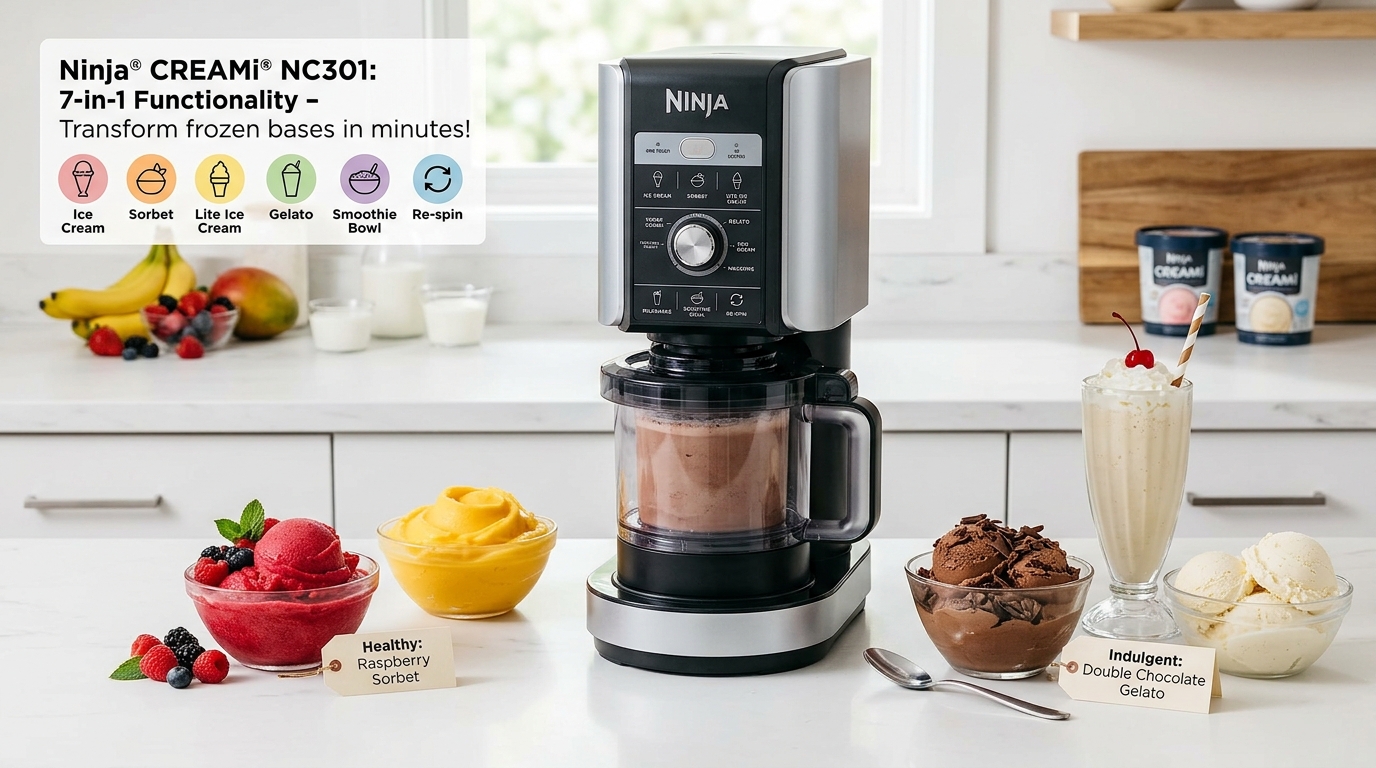
Most kitchen appliances improve on an existing idea. A better blender, a faster kettle, a quieter dishwasher. The Ninja CREAMi NC301 does something a little different: it approaches an old, familiar task, making ice cream at home, from a completely different mechanical direction than nearly every ice cream maker that came before it. Instead of churning a liquid mixture while it slowly freezes over the course of half an hour or more, the CREAMi starts from the opposite end entirely. A base is frozen completely solid first, usually overnight, and only then does the appliance go to work, using a precision milling system to shave and process that rock-hard block into a smooth, creamy dessert in roughly two minutes flat.
That reversal in process order is really the whole story behind why this appliance has developed such a dedicated following since it first appeared. It sidesteps a lot of the fuss traditionally associated with homemade ice cream: no rock salt, no pre-chilled bowls that need to sit in the freezer for a day before use, no standing around monitoring a churn cycle. The trade-off is a different kind of planning, freezing a base in advance, but in exchange, users get a level of control over ingredients that’s genuinely difficult to match with anything bought off a store shelf. The 7-in-1 label refers to the range of programs built into the machine, covering not just classic ice cream but gelato, sorbet, milkshakes, smoothie bowls, mix-ins, and a dedicated lite setting for lower-sugar or lower-fat bases. This article takes a thorough look at how the NC301 actually works, the different ways people put it to use day to day, who tends to get the most value from owning one, what’s genuinely worth considering before buying, how it stacks up against more traditional ice cream making methods, and answers to the questions that come up most often about it.
Key Features
The Ninja CREAMi NC301 brings together a specific processing method and a set of built-in programs designed to make that method accessible for everyday home use.
Precision Vertical Milling System The defining piece of technology behind this appliance is its milling mechanism, a sharp, carefully engineered paddle that shaves and processes a solid block of frozen base into a smooth, creamy texture. This works in the opposite direction from traditional ice cream makers, which churn a liquid mixture as it gradually freezes. Here, freezing happens first, entirely separate from the machine, and processing happens second, in a short, powerful cycle.
Seven Dedicated Programs The appliance includes seven distinct settings, each tailored to a specific type of frozen treat: ice cream, gelato, sorbet, milkshake, smoothie bowl, mix-in, and lite ice cream. Each program adjusts its processing approach to suit the particular texture that category calls for, which removes a fair amount of guesswork that might otherwise come from trying to manually adjust settings for different kinds of bases.
Individual Pint Containers Bases are frozen in individual pint-sized containers before processing. This single-serving-to-small-batch format offers real flexibility, since multiple pints can be frozen at the same time and then processed one at a time as needed, rather than committing to one large batch that has to be used all at once.
Mix-In Program For anyone who enjoys folding in extras like chocolate chips, crushed cookies, or chopped fruit, the dedicated mix-in setting evenly distributes those add-ins throughout a finished base after the primary ice cream, gelato, or sorbet cycle completes, without requiring manual stirring or a separate tool.
Lite Ice Cream Setting Not every base is built around full-sugar, full-fat ingredients, and the lite ice cream program is specifically calibrated for mixtures made with reduced sugar or fat. This helps achieve a smoother, more scoopable result from bases that might otherwise process less predictably under the standard ice cream setting.
Smoothie Bowl Program Beyond dessert, the smoothie bowl setting processes frozen fruit and other smoothie ingredients into a thicker, spoonable consistency, extending the appliance’s usefulness into breakfast or snack territory rather than keeping it strictly limited to dessert.
Compact Countertop Design Despite housing a genuinely powerful internal mechanism, the NC301 is built with a relatively contained footprint in mind, aiming to fit comfortably on a kitchen counter without demanding the kind of dedicated space that bulkier appliances sometimes need.
Complete Ingredient Control Because every base is prepared from scratch before freezing, users have full say over exactly what goes into each batch, whether that means adjusting sugar content, swapping in a different type of dairy or a dairy-free alternative, adding protein, or avoiding a specific allergen entirely.
How It Can Be Used
The blend of processing technology and program variety built into the NC301 means it can realistically fit into a fairly wide range of both everyday and occasional uses.
Everyday Homemade Ice Cream At the most basic level, this appliance is used to turn a simple base of milk, cream, sugar, and flavoring into a smooth, scoopable dessert, frozen overnight and processed the following day without the need for rock salt, ice baths, or a lengthy churning process.
Building Healthier Dessert Options Since users control every ingredient that goes into a base, the NC301 is frequently used to prepare lower-sugar, lower-calorie, or higher-protein versions of ice cream, often incorporating protein powder, alternative sweeteners, or reduced-fat dairy, particularly through the dedicated lite ice cream setting.
Dairy-Free and Allergen-Conscious Treats For anyone managing lactose intolerance, a dairy allergy, or another specific dietary restriction, this appliance allows bases to be built entirely around alternative milks like almond, oat, coconut, or soy, offering a way to prepare frozen desserts that closely replicate traditional ice cream texture without any dairy involved.
Fruit-Forward Sorbet The sorbet program is generally used for dairy-free, fruit-based desserts, allowing purees combined with sugar or another sweetener to be processed into a smooth, refreshing treat that leans considerably lighter than a traditional ice cream base.
Richer, Denser Gelato For those who prefer gelato’s denser texture, the dedicated gelato program adjusts processing to suit bases typically built around a different ratio of milk to cream than a standard ice cream mixture would use.
Milkshakes in a Single Step Rather than blending finished ice cream with milk as a separate step, the milkshake program can process a frozen base directly into a drinkable, milkshake-style consistency, condensing what would otherwise be a two-part process into one.
Smoothie Bowls for Breakfast or a Snack Using frozen fruit and other smoothie-style ingredients, the smoothie bowl function produces a thick, spoonable bowl, giving the appliance a use case that extends well beyond dessert and into breakfast or lighter snacking territory.
Fully Customized Mix-In Creations Once a base flavor has been processed, the mix-in function allows ingredients like cookie pieces, candy, nuts, or fruit chunks to be evenly incorporated, letting users build flavor combinations that may not be readily available anywhere on a store shelf.
Preparing for a Gathering Because several pint containers can be frozen simultaneously, this appliance lends itself well to preparing multiple flavors ahead of a party or get-together, letting a host offer variety without needing to process everything at the exact same moment.
Portion-Controlled Treats The individual pint format naturally supports more controlled portion sizes than a large tub of store-bought ice cream sitting in the freezer, which some users find genuinely helpful for managing overall dessert consumption.
Who It May Be Suitable For
Given its specific combination of technology, customization, and program variety, the NC301 tends to appeal most strongly to certain kinds of users.
Home Dessert Enthusiasts Those who enjoy experimenting with homemade desserts and want more creative control than store-bought ice cream allows are likely to find real appeal in the combination of programs and mix-in capability this appliance offers.
Health-Conscious Individuals For anyone managing calorie intake, sugar consumption, or specific macronutrient targets, particularly those following higher-protein or lower-carb eating patterns, the ability to build a base entirely from chosen ingredients makes this a genuinely popular tool for creating desserts that fit more precisely within specific dietary goals.
Those with Dietary Restrictions People managing lactose intolerance, dairy allergies, or other specific dietary needs may find real, practical value in being able to fully control the ingredients used in each base, avoiding potential allergens or problematic ingredients that are often difficult to steer clear of with pre-made, store-bought frozen desserts.
Families with Kids The novelty and relatively quick processing time can turn this appliance into an engaging kitchen activity for families, letting kids help pick out flavors or mix-ins and watch the transformation from a rock-solid frozen block to finished ice cream happen in just a couple of minutes.
Those Who Plan a Bit Ahead Because the base needs to be frozen in advance, typically overnight, this appliance tends to suit people who don’t mind a little forward planning, whether that means freezing a base the night before or preparing several pints at once for use throughout the week.
Anyone Frustrated by Traditional Ice Cream Makers For those who have tried and been put off by the more involved process of traditional churn-style ice cream makers, whether due to needing rock salt and ice, pre-freezing a large bowl a day in advance, or lengthy churning times, this appliance’s more streamlined process may feel considerably more approachable.
That said, those hoping for instant, same-day ice cream without any advance planning may find the required overnight freezing step less convenient than simply grabbing a tub from a store, and anyone who doesn’t particularly enjoy preparing bases from scratch may not get consistent enough use out of the appliance to justify the purchase.
Important Things to Consider
There are several practical points worth thinking through before bringing an NC301 into a kitchen.
Advance Planning Is Non-Negotiable Unlike pulling a tub of ice cream straight from the freezer, using this appliance requires preparing a base mixture and freezing it, typically for a full 24 hours, before it can be processed. That means it isn’t well suited to same-day, spontaneous ice cream cravings unless bases have already been prepared and frozen in advance.
Ingredient Ratios Take Some Learning Consistently smooth, scoopable results often depend on getting the right balance of fat, sugar, and liquid in a given base, since those ratios significantly affect how well a mixture processes. Some trial and error is common, particularly for anyone experimenting with lower-sugar or dairy-free recipes for the first time.
Freezer Space and Container Positioning Each pint container needs to lie flat in the freezer during the freezing process, which is worth thinking through for households with limited freezer space, especially if multiple pints are being frozen at once.
Noise During the Processing Cycle Given the mechanical force involved in shaving through a solid frozen block, this appliance can be fairly loud during its roughly two-minute processing cycle, worth being aware of for early mornings or late-night use.
Occasional Need for a Re-Spin Depending on a base’s specific fat or sugar content, some mixtures may come out slightly crumbly or not fully smooth after the first processing cycle, requiring an additional “re-spin” to reach the desired consistency.
Multiple Components to Clean Between the pint containers, lids, and the processing paddle itself, there are several parts that need regular cleaning after each use, worth factoring in compared to simply scooping ice cream straight out of a store-bought container.
Ingredient Costs Add Up Over Time While homemade bases can sometimes be more cost-effective than premium store-bought ice cream, particularly for larger households, the cumulative cost of quality ingredients like cream, protein powder, or specialty sweeteners is worth weighing against how frequently this appliance will realistically get used.
One Batch Per Container Because each pint container processes a single batch, larger households or gatherings may need to prepare and process multiple pints to have enough for everyone, which adds both time and a bit of extra planning compared to a single large batch produced by some traditional ice cream makers.
Comparison
Compared to traditional churn-style ice cream makers, this appliance offers a dramatically faster active processing time, roughly two minutes compared to twenty to forty minutes of churning, though it does require a full day of advance freezing that traditional churn makers, which typically produce a soft-serve consistency within the churning cycle itself, generally don’t require in quite the same way.
When compared to store-bought ice cream, this appliance offers far more control over ingredients, allowing for lower sugar content, alternative dairy, or higher protein levels, though it requires considerably more hands-on effort and advance planning than simply picking up a tub from a store.
Against other at-home frozen dessert appliances that use a blender-based approach, blending pre-frozen fruit or yogurt directly, this appliance’s milling mechanism is generally recognized for producing a smoother, more traditional ice-cream-like texture, particularly with dairy-based bases, though blender-based methods can sometimes offer more spontaneity since they don’t always require the same lengthy freezing period.
Compared to soft-serve machines, which continuously churn a liquid mixture into a soft, ready-to-eat consistency, this appliance produces a firmer, more traditional scoopable texture, though soft-serve machines generally allow for more immediate, on-demand serving without the overnight freezing step.
Overall, the NC301 occupies a distinct niche: an appliance built around genuine ingredient control and textural precision, trading some spontaneity for a level of customization that’s difficult to match with either store-bought options or more traditional ice cream making methods.
FAQ
How long does a base need to freeze before it can be processed? Bases generally need to freeze for around 24 hours in the pint container before they’re ready to be processed into ice cream, gelato, sorbet, or another selected treat.
How long does the actual processing cycle take? The milling and processing itself generally takes only about two minutes once the base has been properly frozen.
Can this appliance make dairy-free desserts? Yes, bases can be prepared using alternative milks such as almond, oat, coconut, or soy, making this a popular option for those managing dairy allergies or lactose intolerance.
What happens if the result comes out crumbly instead of smooth? Depending on a base’s specific fat and sugar content, some mixtures may need an additional re-spin cycle after the initial processing to reach a smoother, more scoopable consistency.
Can mix-ins like chocolate chips or fruit be added? Yes, the dedicated mix-in program is specifically designed to fold add-ins evenly into a processed base after the main cycle finishes.
Is this a good option for making lower-sugar or high-protein ice cream? Yes, the lite ice cream program is specifically calibrated for bases made with reduced sugar or fat, and many users incorporate protein powder into their bases to align with specific dietary goals.
How much ice cream does a single batch make? Each cycle processes one pint container, generally producing an individual to small-batch portion rather than a large tub-sized quantity.
Does this appliance make more than just ice cream? Yes, in addition to ice cream, it includes dedicated programs for gelato, sorbet, milkshakes, smoothie bowls, and mix-ins, along with a lite ice cream setting.
Conclusion
The Ninja CREAMi 7-in-1 Ice Cream Maker NC301 takes a genuinely different technical approach to homemade frozen desserts, transforming solidly frozen bases into smooth, scoopable treats through a powerful milling process rather than traditional churning. Its combination of seven distinct programs, full ingredient control, and a relatively fast processing time makes it a versatile tool for anyone interested in customizing their frozen desserts, whether that means building healthier, lower-sugar alternatives, accommodating dietary restrictions, or simply experimenting with creative flavor and mix-in combinations at home. While the overnight freezing requirement means it isn’t suited to same-day cravings, and there’s some learning involved in dialing in ideal base ratios, its precision and versatility have made it a genuinely popular choice for those willing to plan a little ahead in exchange for real control over what ends up in their bowl.